


When it comes to building a brand, few words are more revered, or more misunderstood, than clarity.
At the beginning, clarity usually means clear positioning and sharp messaging. But as brands grow, whether through new products, new services, acquisitions, or mergers, clarity of structure becomes critical. That’s when brand architecture steps in.
What is Brand Architecture?
Brand architecture is the discipline of structuring the relationship between a parent brand and its sub-brands, products, or services. Think of it like an organizational chart, but for brands.
Are you realizing your brand no longer fits? Do you need support marketing your brand to your ideal customer? Let’s talk about what’s next.
Done well, brand architecture gives clarity:
to customers (so they understand what belongs together and what doesn’t)
to teams (so they know how to talk about the brand without improvising every time)
to leadership (so decision-making isn’t just gut feel, but guided by a clear framework)
Why Brand Architecture Matters
Without a structure, fast-growing brands tend to dilute themselves. They add products, extend services, or acquire new companies, and suddenly the message gets blurry. Audiences get confused. Teams struggle with consistency.
On the flip side, a strong brand architecture creates:
Focuseach sub-brand can speak clearly to its audience.
Efficiencycross-promotion and marketing get easier.
Clarityyou stand for something recognizable in the market.
Convictionleadership can see the forest and the trees.
It’s not just for the Apples and Unilevers of the world. Even small and midsize businesses benefit when they have a roadmap for how their offerings fit together.
The Main Models of Brand Architecture
There are four dominant models:
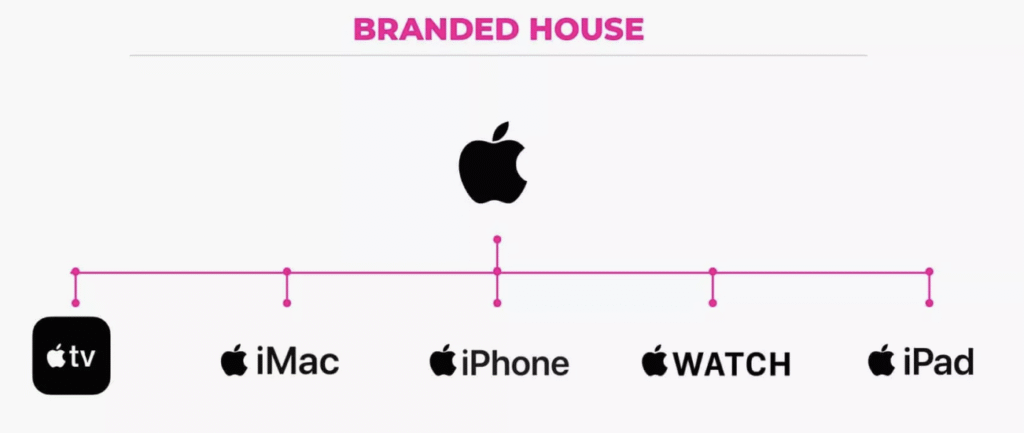
Branded House – everything ladders back to the master brand (Apple, Virgin).
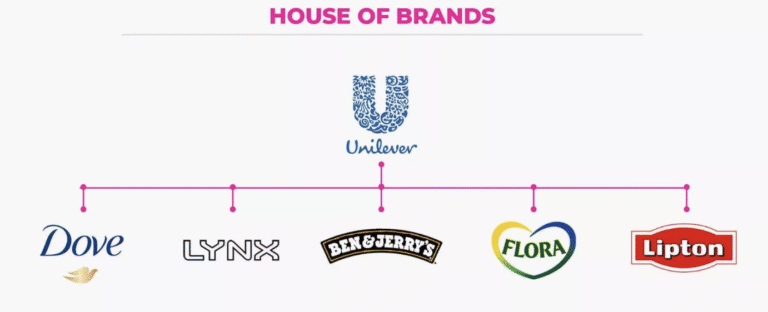
House of Brands – the parent company hides behind independent brands (Unilever, P&G).
Endorsed Brands – sub-brands carry their own weight but with a nod to the parent (Sony PlayStation, Marriott Hotels).
Hybrid – sub-brands feel related in style but not explicitly named (Google Maps, Google Chrome, Google Ads).
Each has its strengths, but the right choice depends on growth strategy, audience, and long-term positioning.

How Brand Architecture Fuels Growth
Here’s the paradox: growth creates complexity, and complexity destroys clarity. Brand architecture bridges the gap. It allows brands to scale without losing the trust and equity they’ve already built.
When you map your brand system deliberately, you can:
Target specific audience segments with precision.
Make marketing dollars go further with sharper messages.
Build independent equity for sub-brands while still leveraging the master brand.
Avoid the “muddled middle” where nothing is distinct.
In other words: brand architecture is not an academic exercise, it’s a growth strategy.